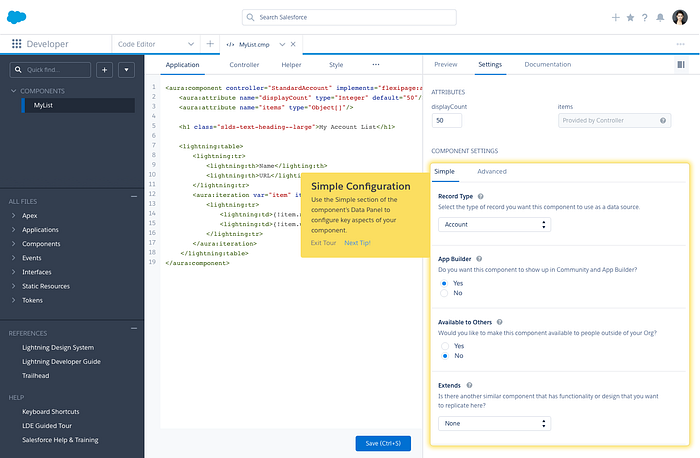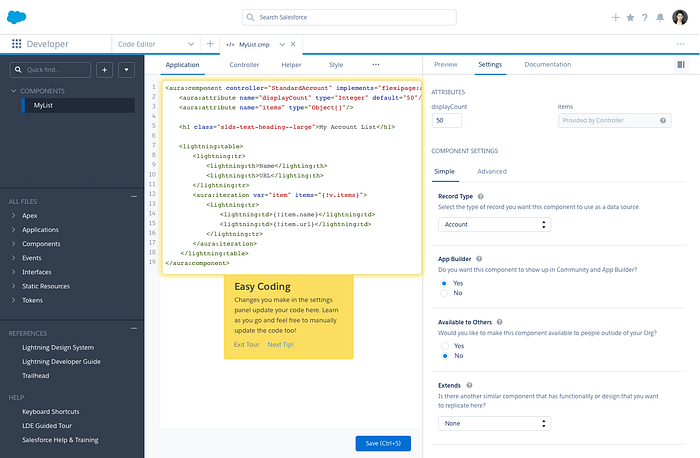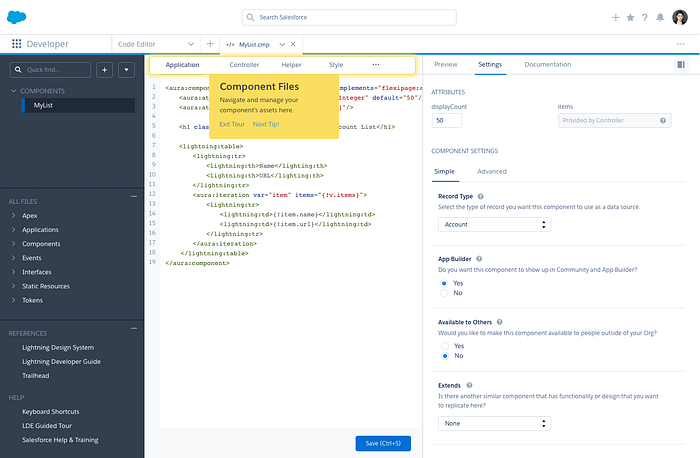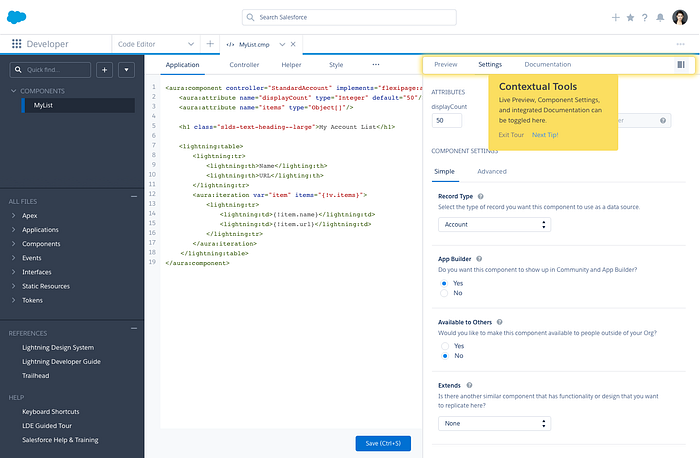

Low & high code web IDE
In the early 2010s, Salesforce released a web technology called Aura (now LWC). This technology was an opinionated framework for writing web components that ran on our platform. The technology was proprietary, innovative, and, honestly, foreign to most admins and developers alike.
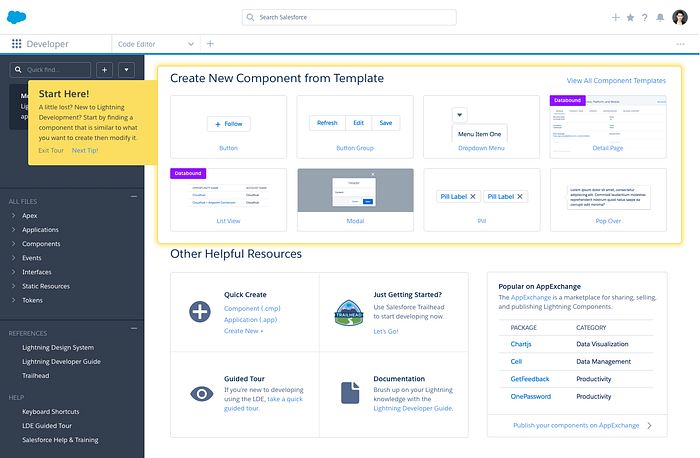
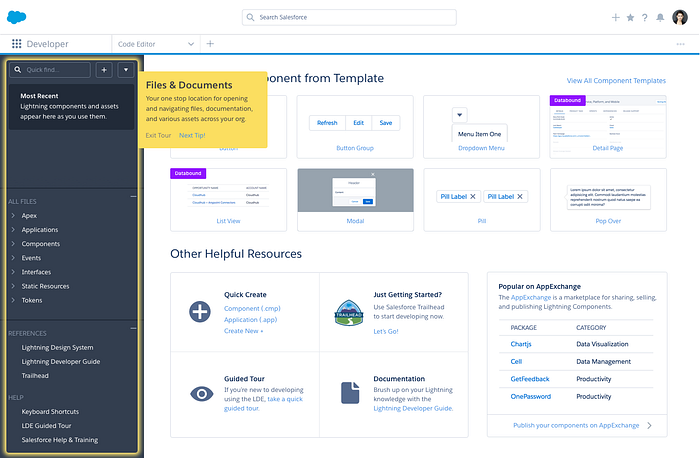
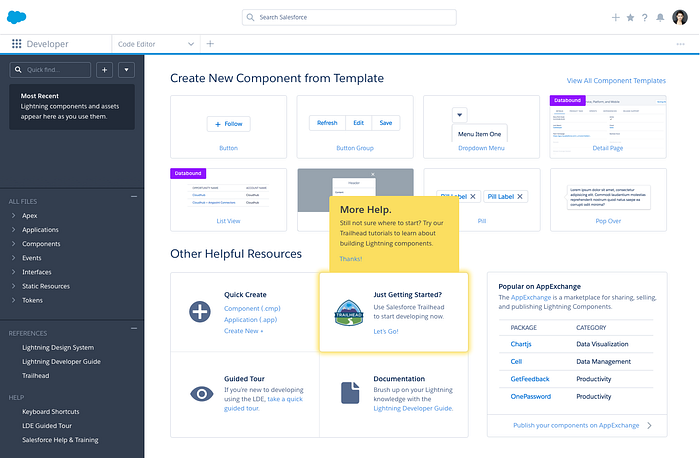
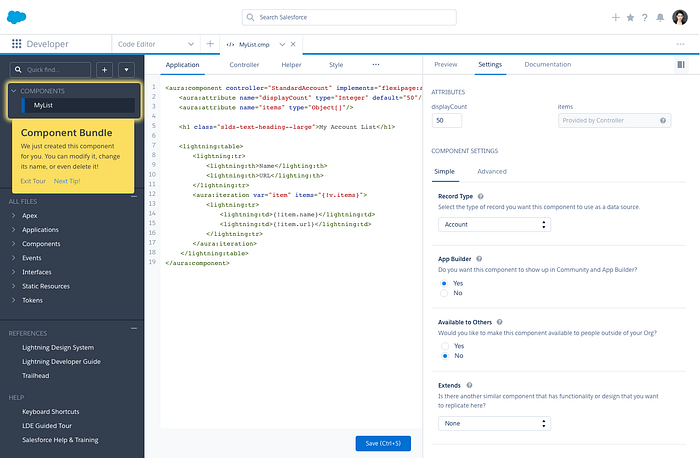
This is how we enabled users to get to know (and adopt) Aura more quickly.
Project kickoff

Whiteboarding was critical to early-stage ideation.
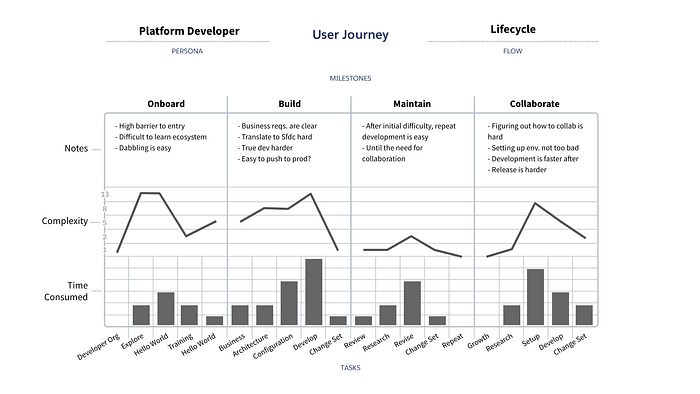
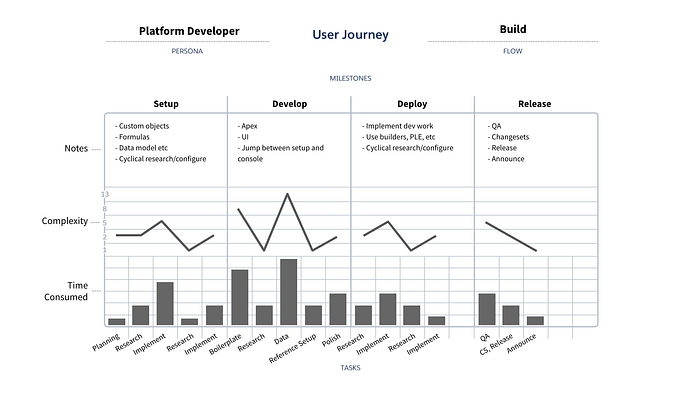
We followed through the early ideation with multiple analyses of how users build on our platform.
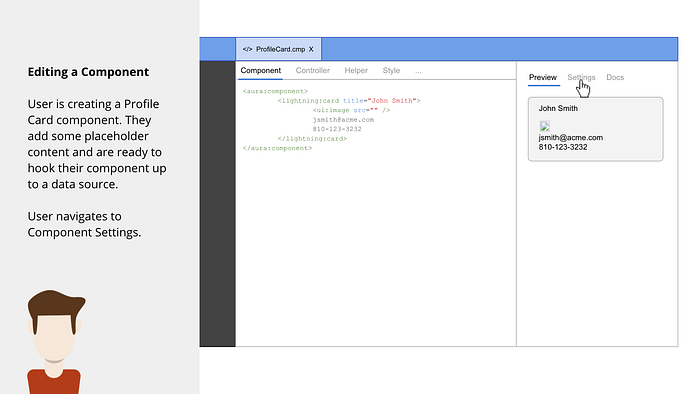
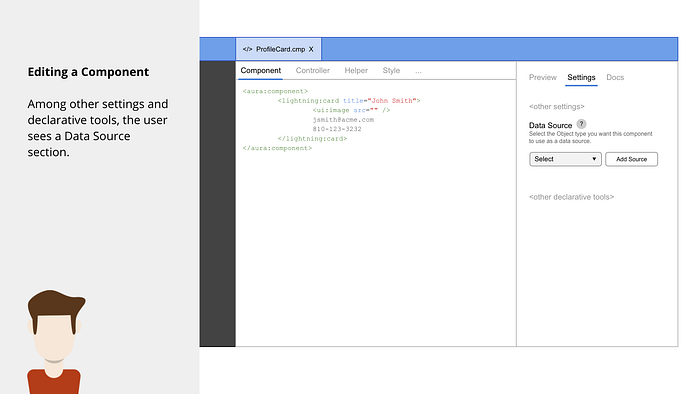
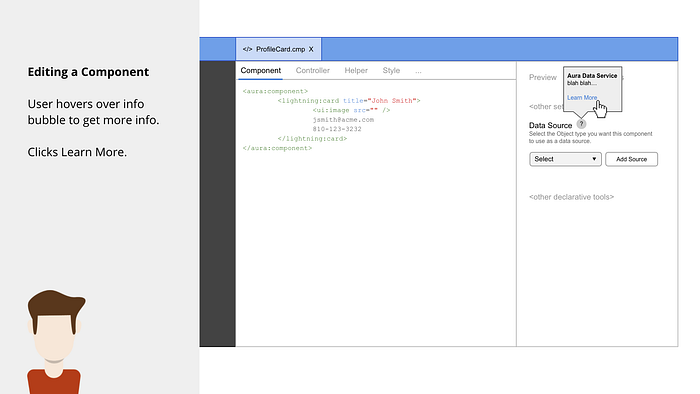
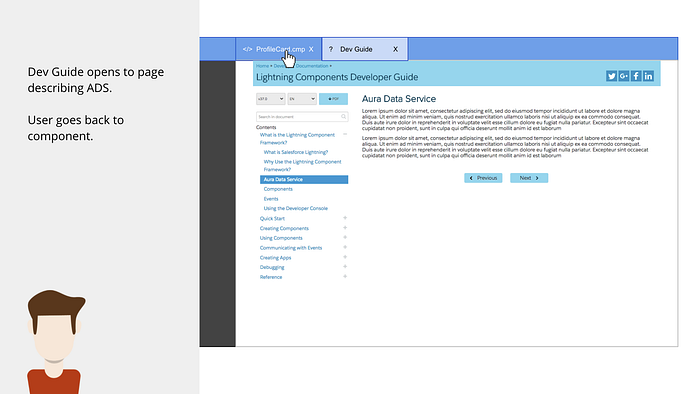
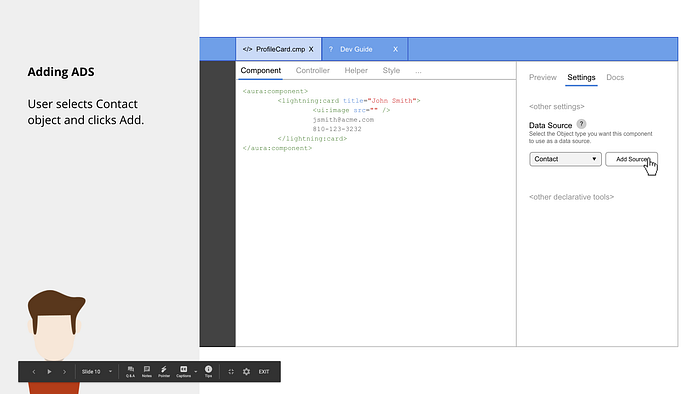
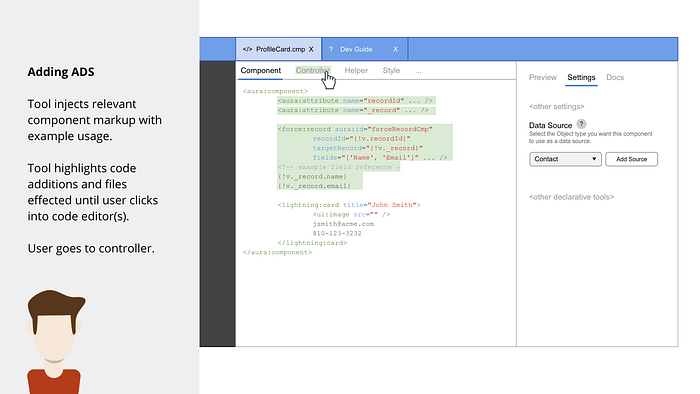
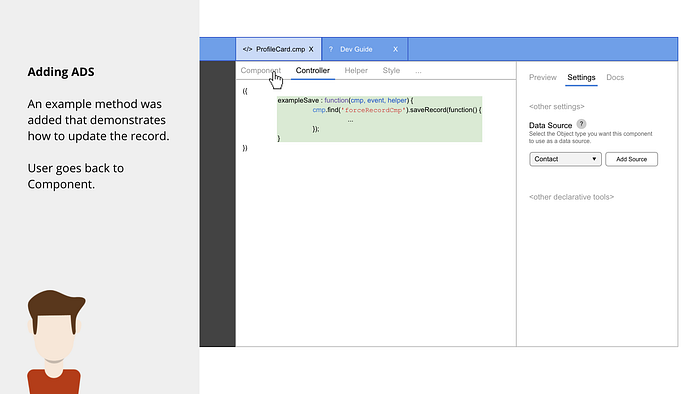
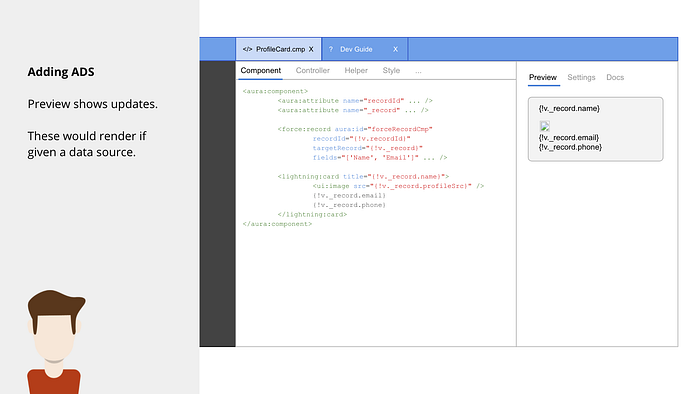
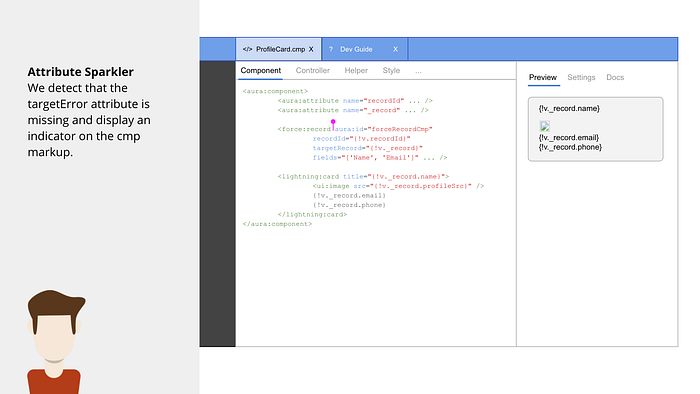
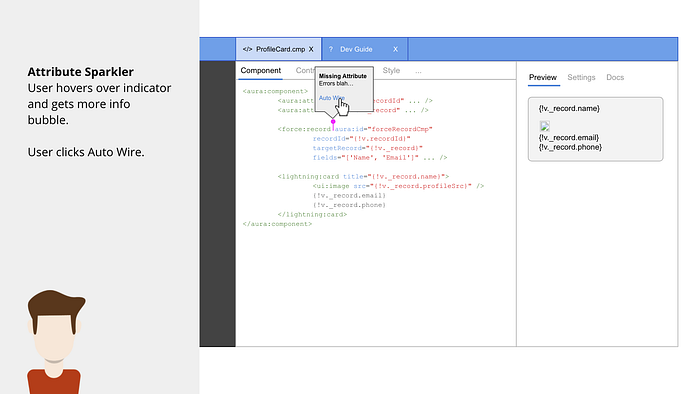
After these early-stage brainstorming and research sessions, we were able to pretty quickly move to rough ideation and a wireframe prototype to begin validating our direction more substantially with users:
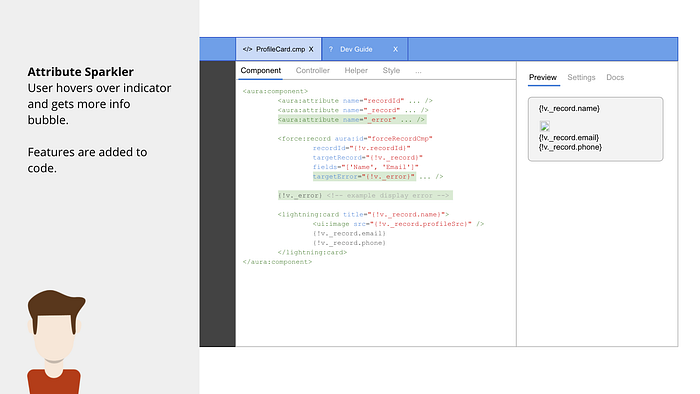
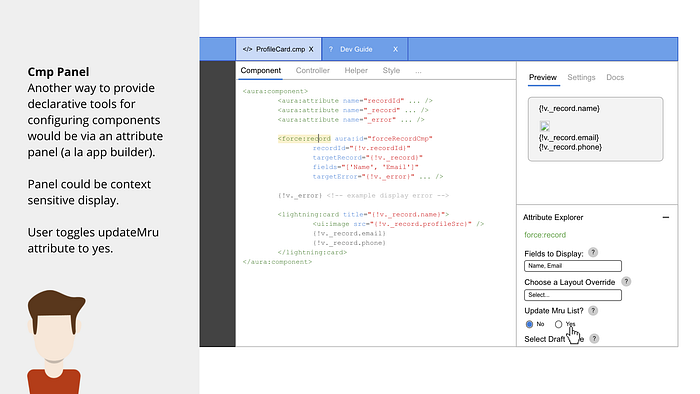
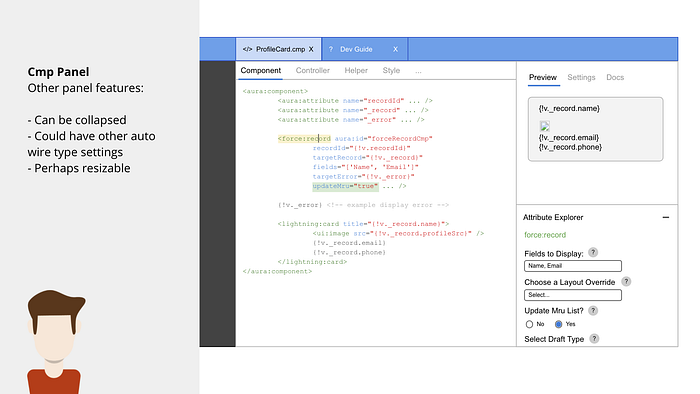
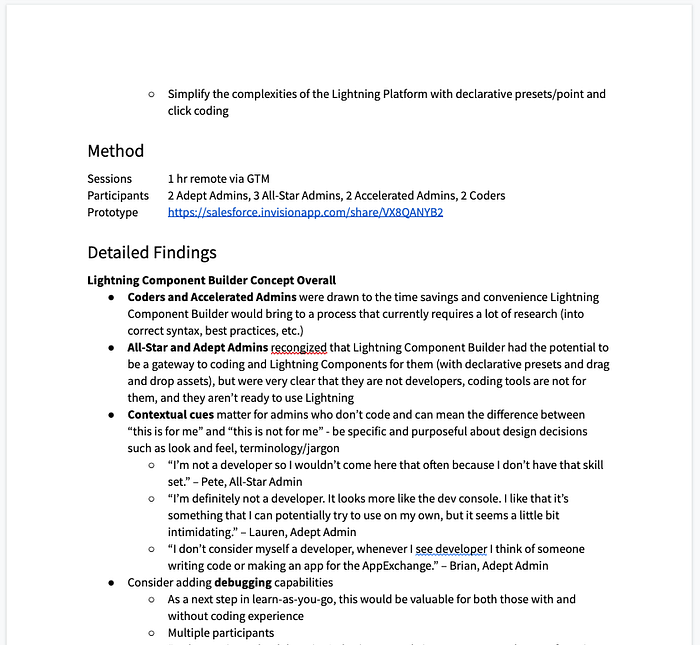
Research results
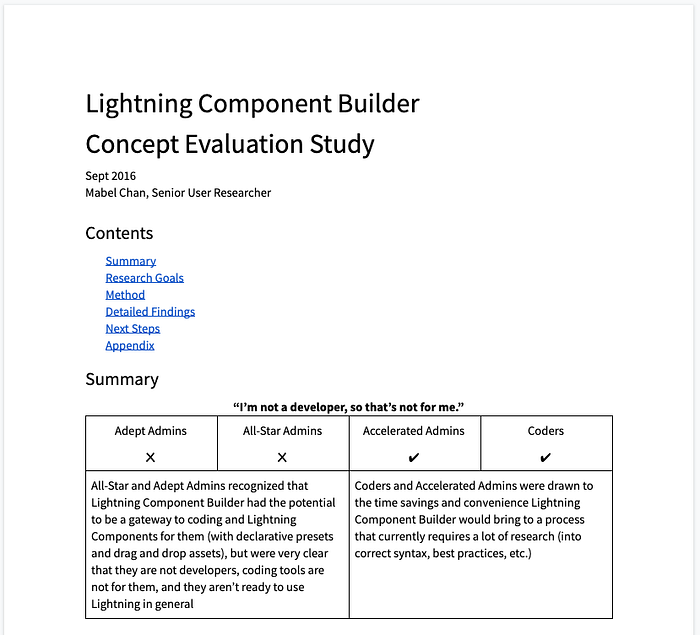
With the wire-framed prototype, the researcher was able to deliver a comprehensive analysis of the user’s perception and reception of the product.
Systems design
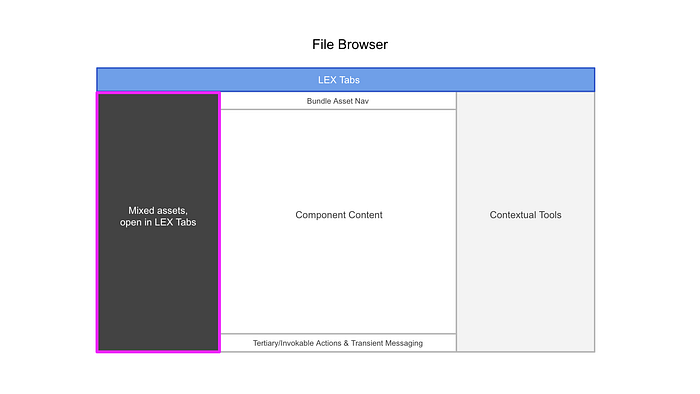
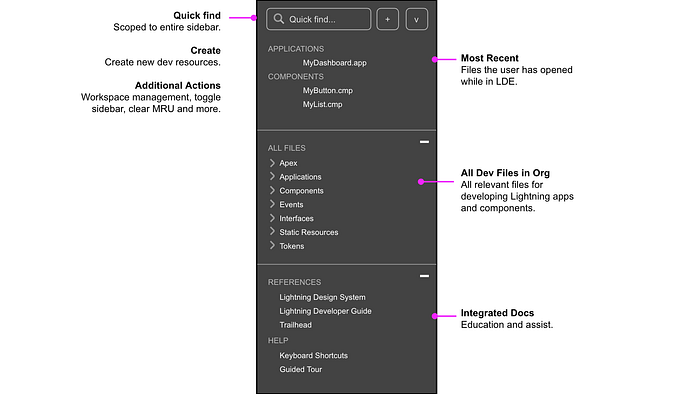
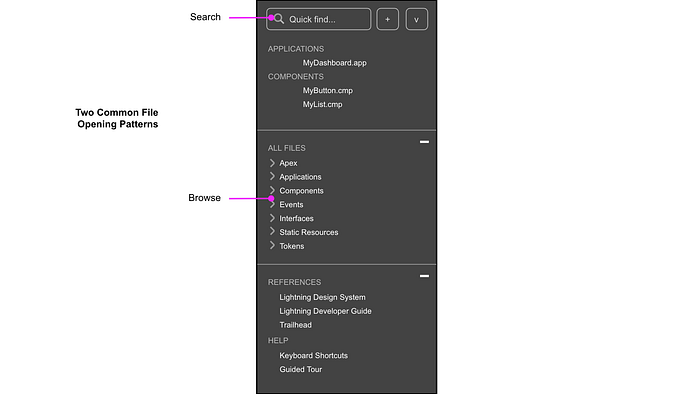
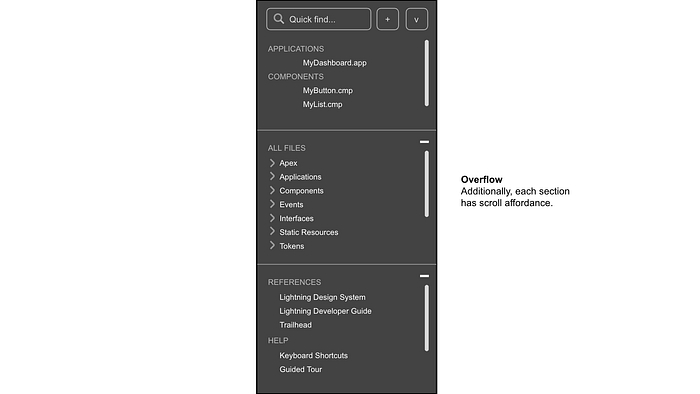
After refining the direction and before moving on to eventual final fidelity levels of the experience, I worked with the team to document the systems of the builder, including the definition of the Information Architecture as well as the scalability of features like the file browser and integrated documentation.
One more round of validation
Before moving on to the final version of the product, we made relevant refinements from our research learnings and ran one more final round of validation with users around the same time the development was kicking off.
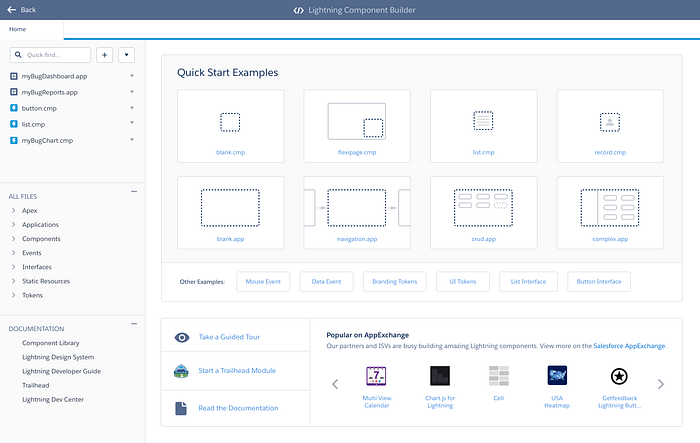
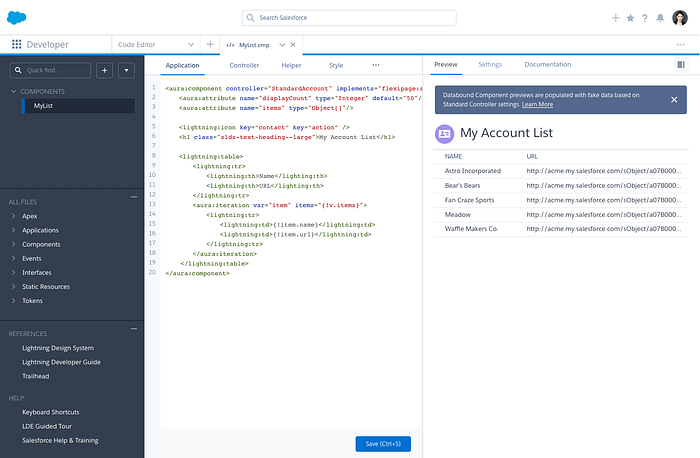
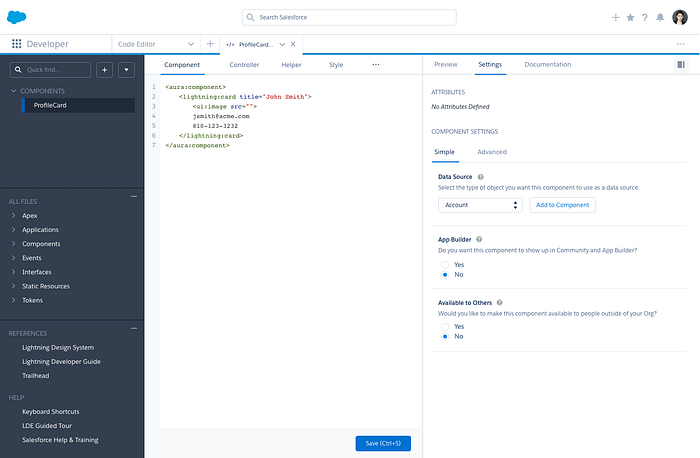
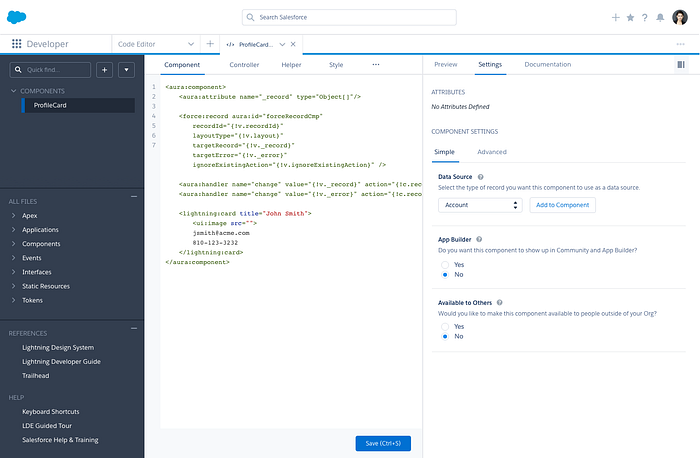
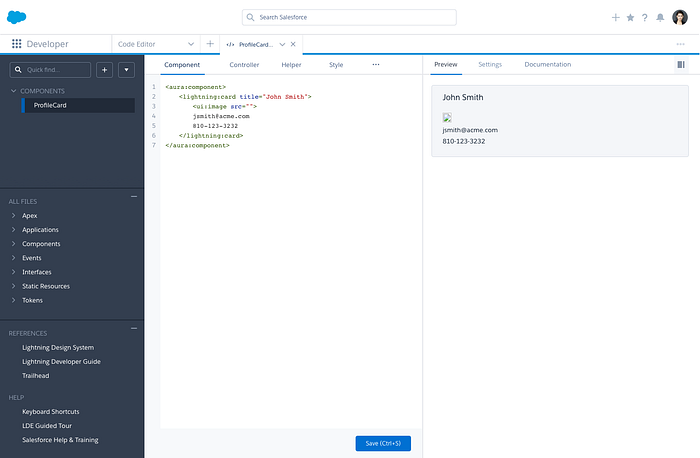
This fidelity level was considerably higher than the earlier wireframes but still had gray areas and some of the finer details were still line and shape placeholders.
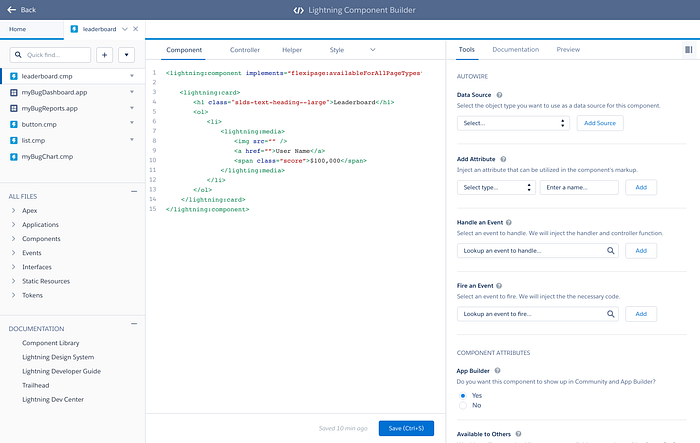
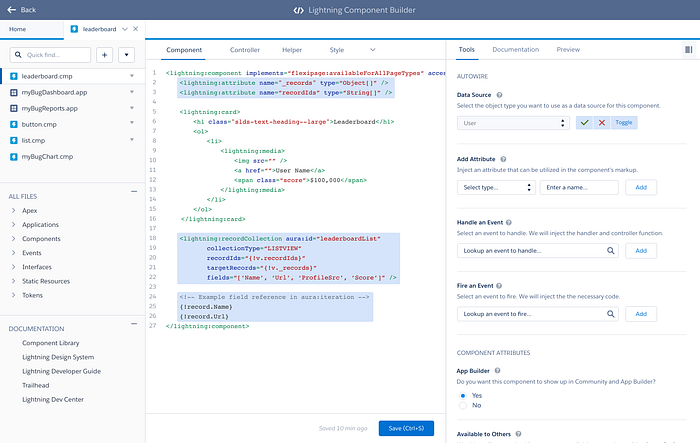
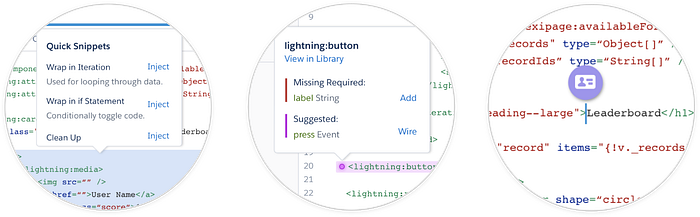
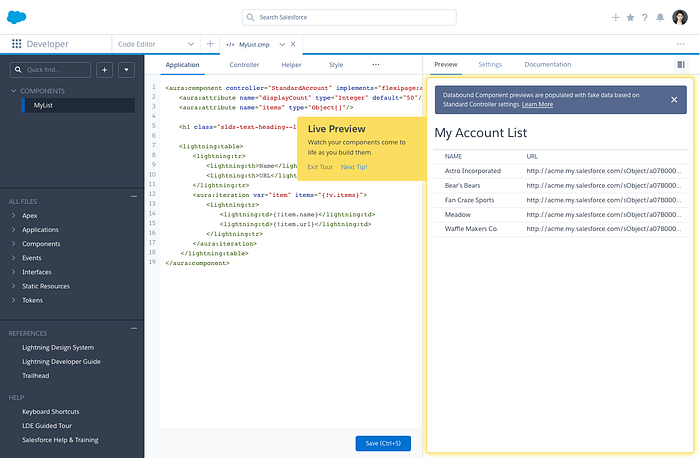
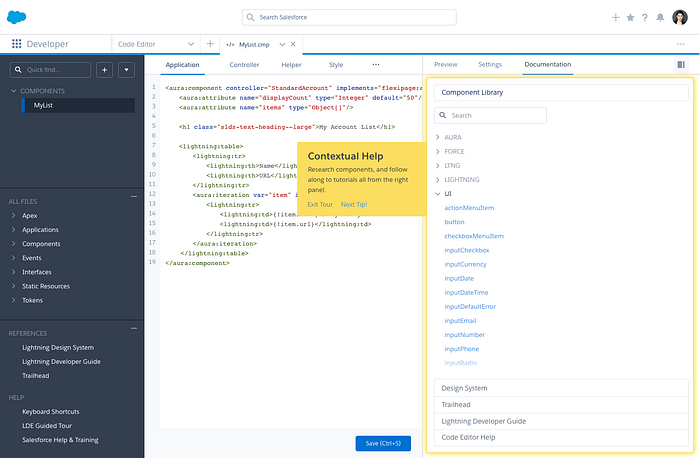
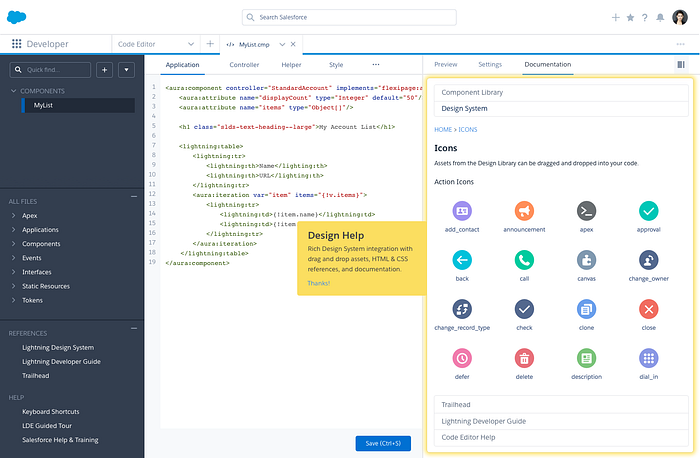
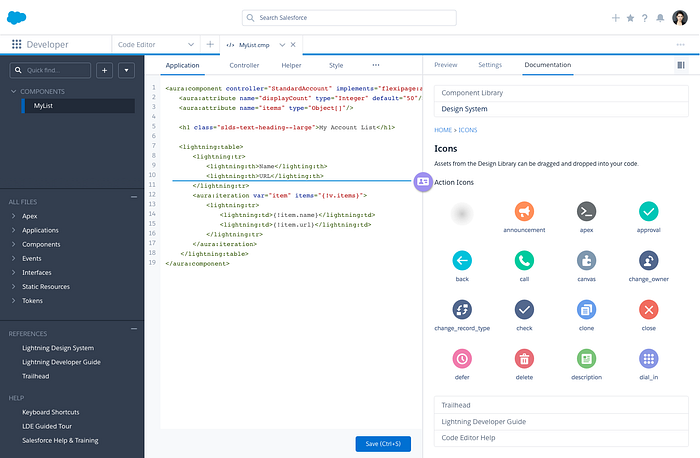
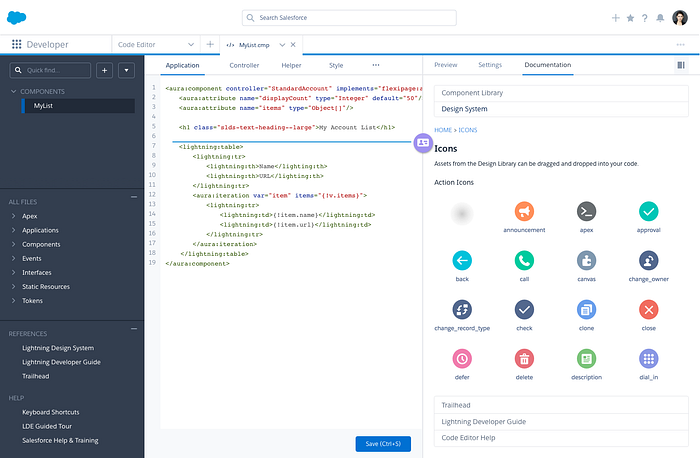
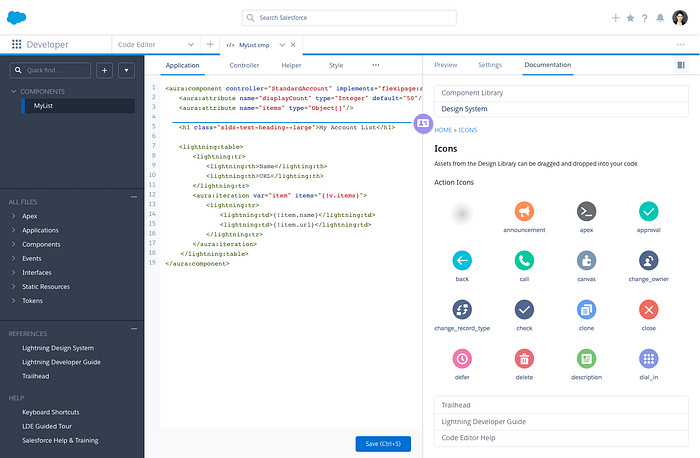
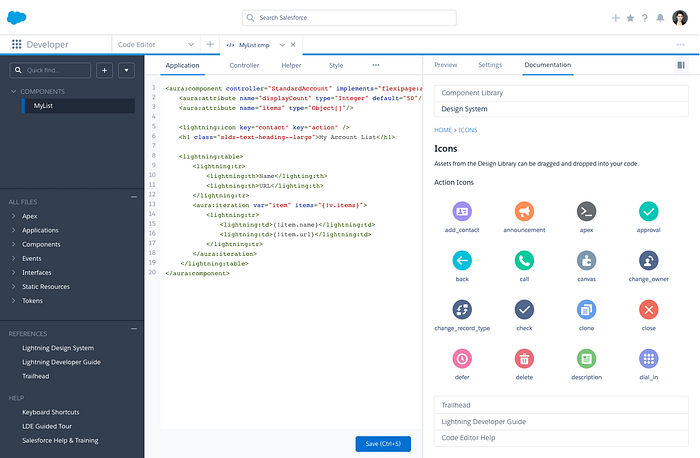
Innovative features for making coding more enjoyable & efficient.
Final designs
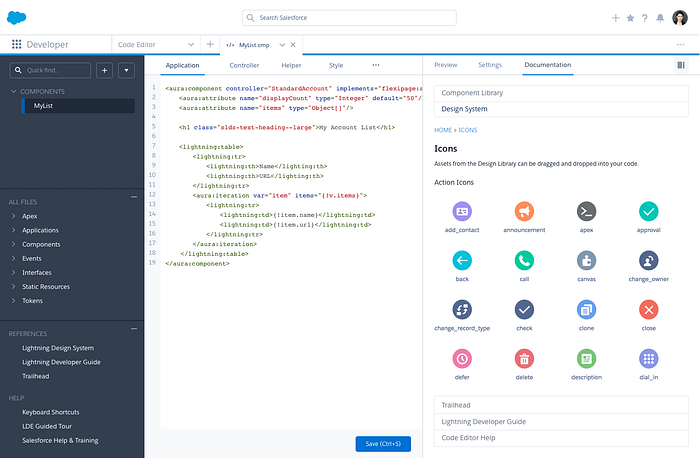
Over the course of the next year, the team worked together to release one of the most innovative code editors ever devised at Salesforce. The following are the final production screens of the experience.